The Science Behind Low Acid Coffee
Why most "low acid" marketing misses the point — and what actually matters for your stomach.
What is CQA?
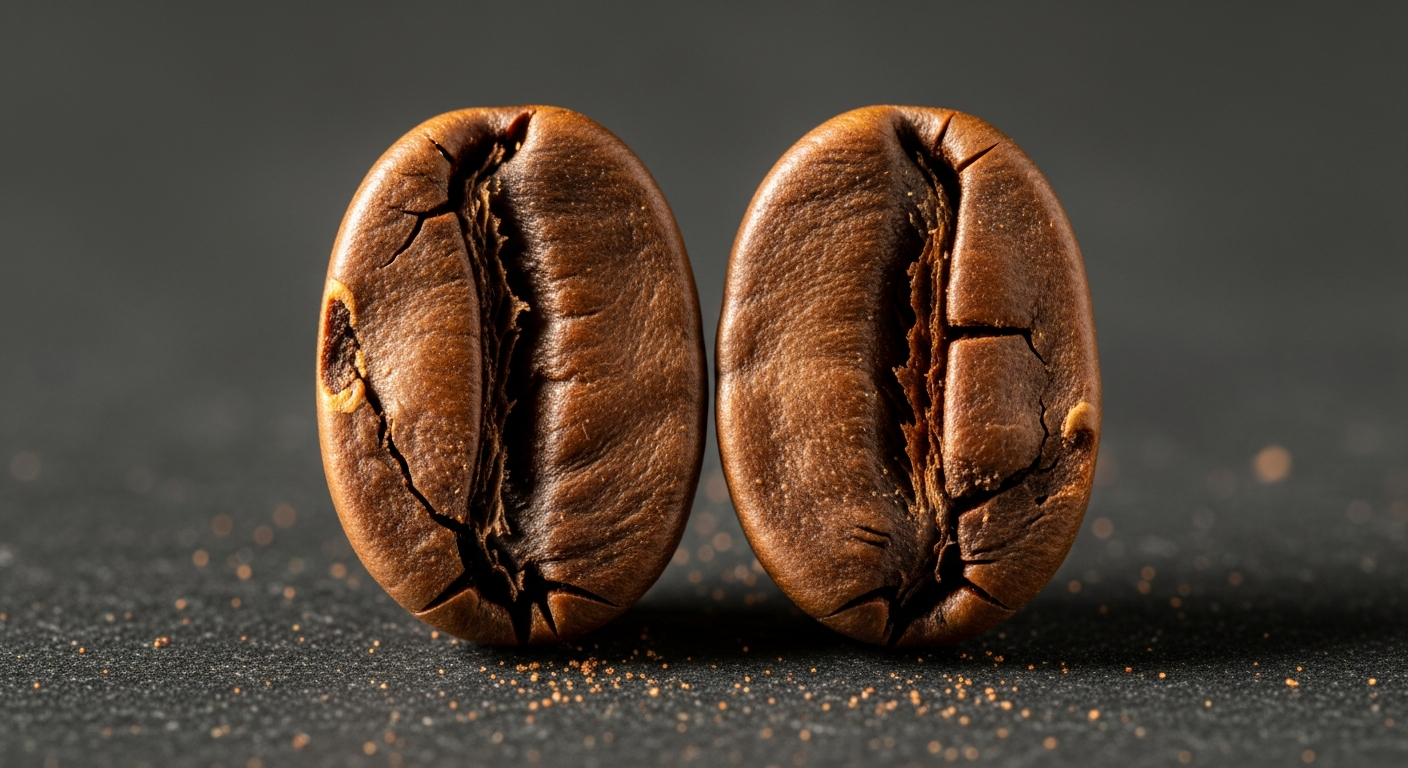
Chlorogenic Acid (CQA) is a family of compounds naturally present in coffee beans. While CQA has antioxidant properties, it is also the compound that researchers at the UC Davis Coffee Center identified as the primary trigger for coffee-related heartburn, acid reflux, and GERD symptoms.
When you drink coffee high in CQA, it stimulates excess gastric acid secretion in your stomach. This is what leads to that familiar burning sensation — not the coffee's pH level, but the CQA telling your stomach to produce more acid than it needs.
The UC Davis Research
Researchers at the UC Davis Coffee Center conducted studies identifying Chlorogenic Acid compounds as key irritants in coffee that trigger gastrointestinal distress. Their work demonstrated that reducing CQA levels — rather than simply adjusting pH — is the meaningful approach to making coffee easier on the stomach.
Convection Roasting vs. Drum Roasting
The way coffee is roasted determines how much CQA remains in the final product. The difference is dramatic.
✗ Drum Roasting
Industry standard — used by most roasters
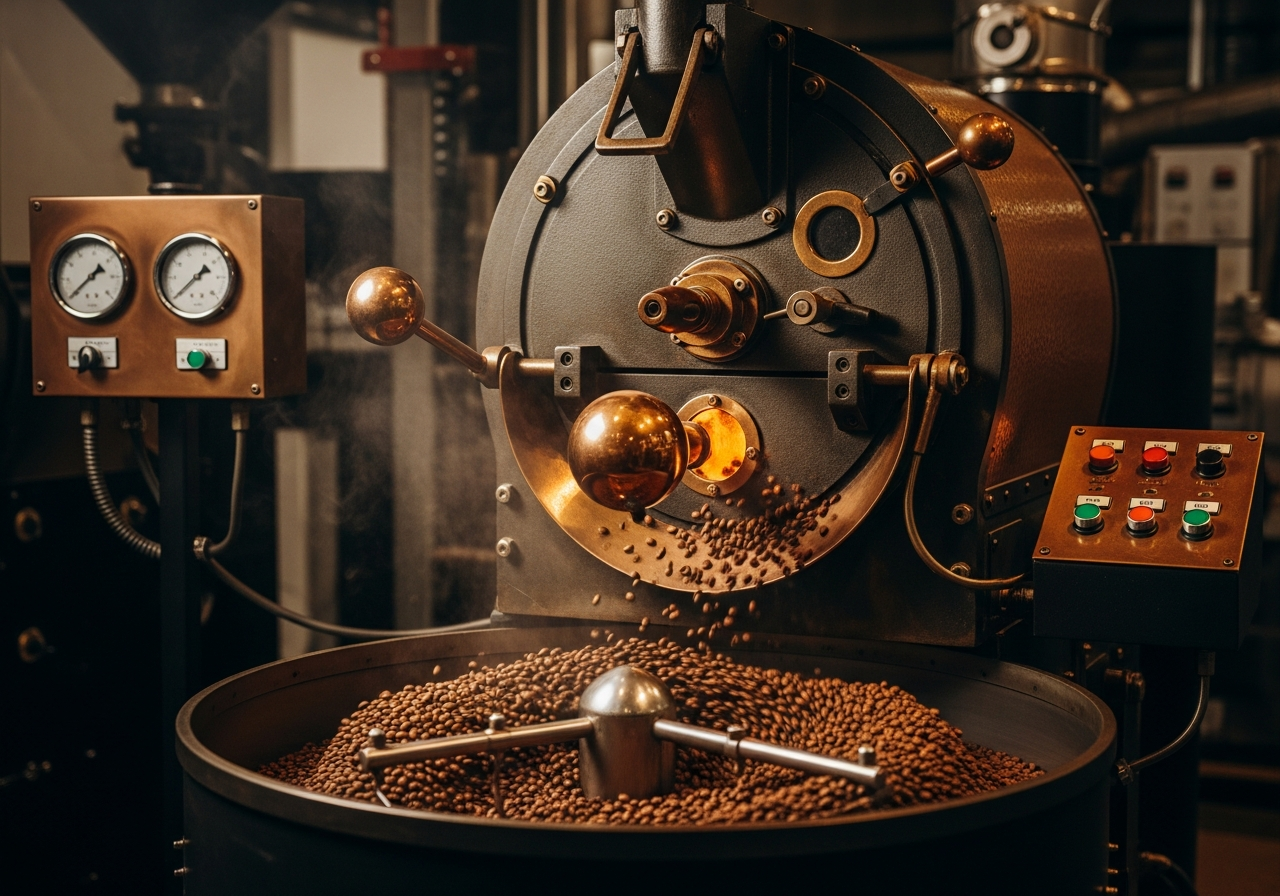
- ✗ Beans contact hot metal surface directly
- ✗ Uneven heat creates hot spots and cool spots
- ✗ CQA compounds not fully broken down
- ✗ High residual CQA levels in brewed coffee
Relative CQA Level
✓ Convection Roasting
Patented process — used by Low Acid Cafe
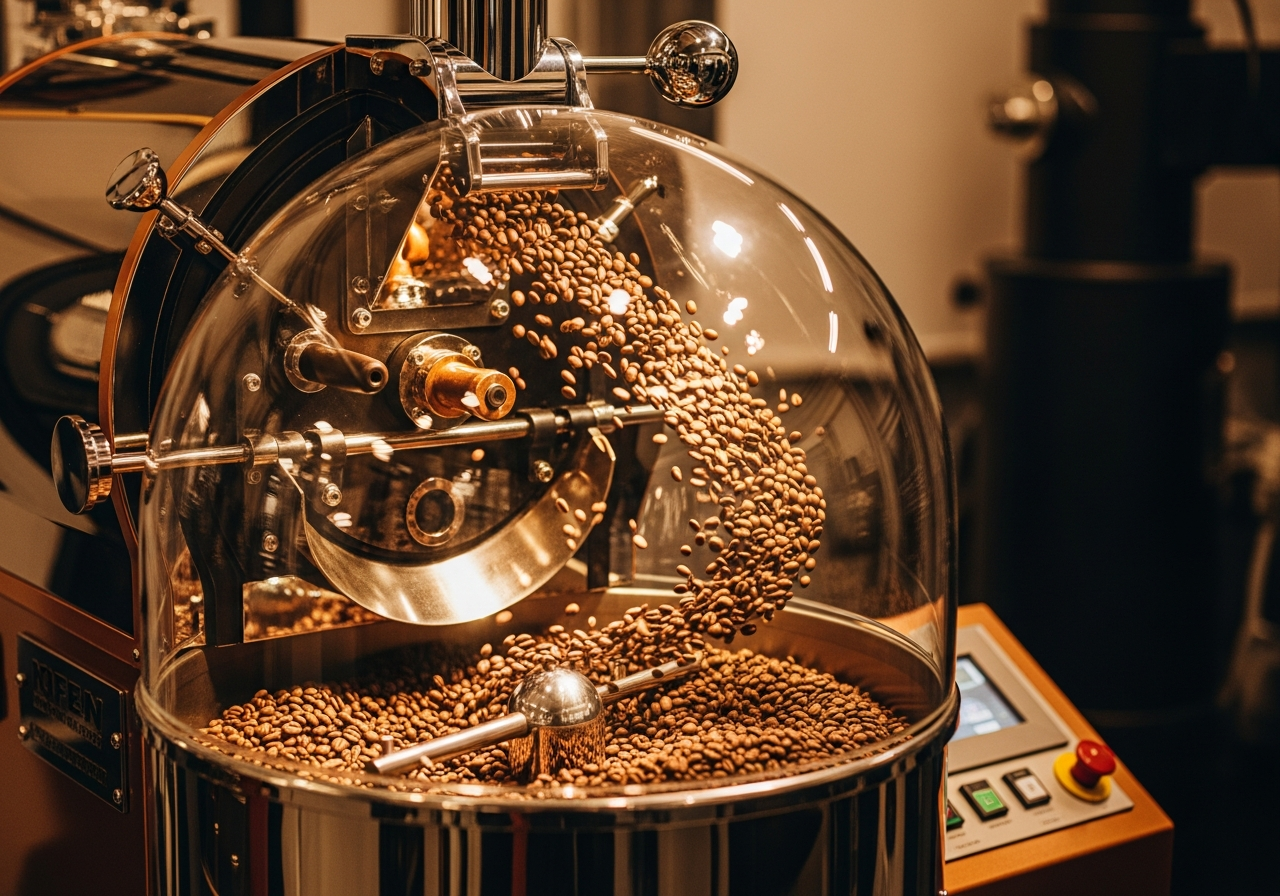
- ✓ Hot air surrounds each bean evenly
- ✓ Consistent, uniform roasting temperature
- ✓ CQA compounds break down far more effectively
- ✓ CQA levels magnitudes lower in brewed coffee
Relative CQA Level
LOW
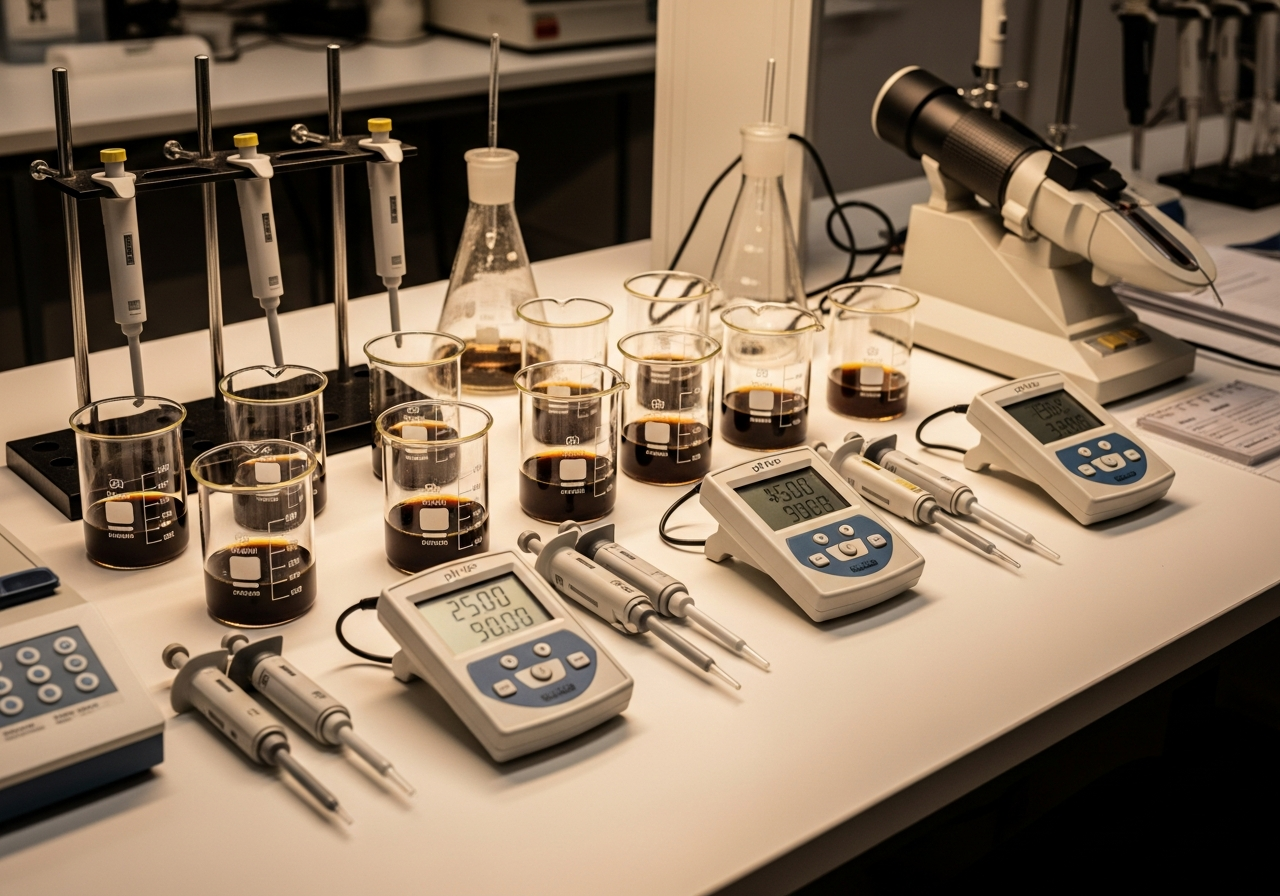
Independent Lab Verification
We don't ask you to take our word for it. Independent laboratory testing has confirmed that our convection-roasted coffee contains CQA levels magnitudes lower than traditionally drum-roasted coffee of comparable origin and roast level.
Lab Results Summary
Magnitudes
Lower CQA than drum-roasted
100%
Arabica, no blending shortcuts
Zero
Additives or acid reducers
The pH Myth
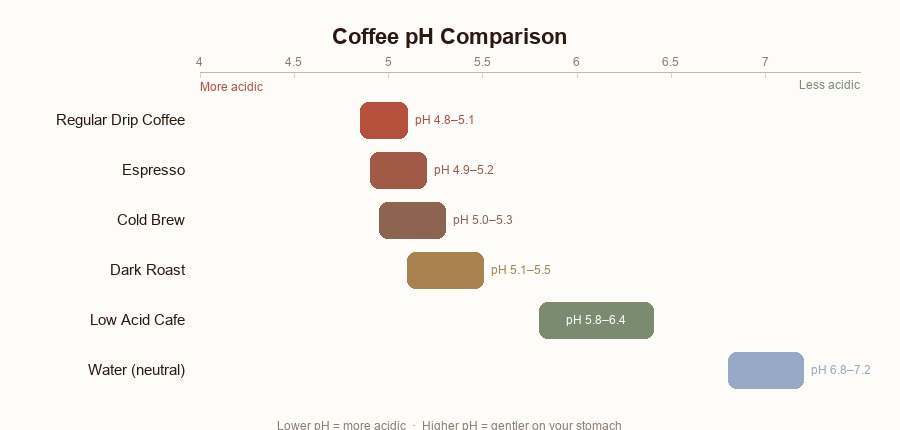
Many "low acid" coffee brands focus on pH levels. Here's why that misses the point entirely.
The pH Approach
- Measures hydrogen ion concentration (overall acidity)
- All coffee is mildly acidic (pH 4.8-5.1) regardless of brand
- Small pH differences are not clinically meaningful
- Does not address the specific compounds causing heartburn
- Some brands add alkaline compounds to raise pH — masking the problem
The CQA Approach
- Targets the specific acid compounds causing heartburn
- Chlorogenic Acid is the trigger identified by UC Davis researchers
- Convection roasting breaks down CQA at the source
- Measurable, lab-verifiable difference
- No additives needed — the roasting process does the work
Bottom line: pH tells you how acidic the liquid is. CQA tells you whether that liquid will trigger your heartburn. Two coffees can have identical pH but vastly different CQA levels. We focus on what actually matters.
Science You Can Taste
Try the coffee that's backed by research, verified by labs, and loved by people who thought they'd never drink coffee again.